
Apple’s iOS 18.4 developer beta has added Visual Intelligence, the company’s Google Lens-style tool, to the iPhone 15 Pro and iPhone 15 Pro Max, as first reported by 9to5Mac.

Apple previously confirmed that Visual Intelligence would make its way to these models in a future update, but didn’t specify when. Now, barring any last-minute changes, it looks like the feature will arrive for all users with the official release of iOS 18.4, expected in April.
Visual Intelligence debuted with the iPhone 16 lineup in September, integrated into the Camera Control button. Since iPhone 15 Pro and Pro Max lack this button, Apple has instead adapted the feature to work via the Action Button or Control Center, similar to how it functions on the newly launched iPhone 16E.
Additionally, today’s iOS 18.4 developer beta 2 update brings Action Button and Control Center support for Visual Intelligence to the entire iPhone 16 lineup, making it more accessible across multiple devices.
With the official release of iOS 18.4 just weeks away, iPhone 15 Pro users will soon be able to experience Apple’s take on AI-powered image recognition.
Looks like Apple’s gearing up to drop a new MacBook Air with the M4 chip, and it could happen as soon as next week. Bloomberg’s reporting that Apple’s got a Mac-related announcement in the works, which pretty much lines up with last year’s M3 MacBook Air launch in early March. So yeah, no surprises there.

The M4 chip is obviously the big deal here. Apple’s already rolled it out in the MacBook Pro, and now it’s coming to the Air. From what we’ve seen, the M4 packs 10 CPU cores—a mix of 4 high-performance ones and 6 efficiency cores—plus a 10-core GPU, which should mean a decent graphics boost. Apple’s talking about 1.8x the performance of the M1, and something like 3.4x the speed in heavier tasks, like rendering stuff in Blender.
Now, in theory, this puts the MacBook Air’s M4 chip close to the MacBook Pro’s, but let’s not get ahead of ourselves. The Air doesn’t have a fan, which means thermal throttling is still gonna be a thing. Benchmarks might look great, but real-world performance under sustained loads? That’s another story. If the M3 Air was anything to go by, expect it to run hot and throttle down when pushed too hard.
As for the design, don’t expect much to change. It’ll still come in 13-inch and 15-inch sizes, still look like the M3 version, and maybe—just maybe—Apple throws in a new color or something to shake things up. Pricing? No word yet, but if they don’t bump it up, the base 13-inch model should still start around $1,099.
So yeah, not exactly a revolutionary update, but if you were already looking at getting a MacBook Air, might as well wait a few days and see what happens.
The first iPhone 16e reviews are in, and Apple’s custom-designed C1 modem has been put through its paces. The results? Surprisingly solid performance, with 5G speeds comparable to Qualcomm's Snapdragon X71 modem, found in the iPhone 16, 16 Plus, 16 Pro, and 16 Pro Max.
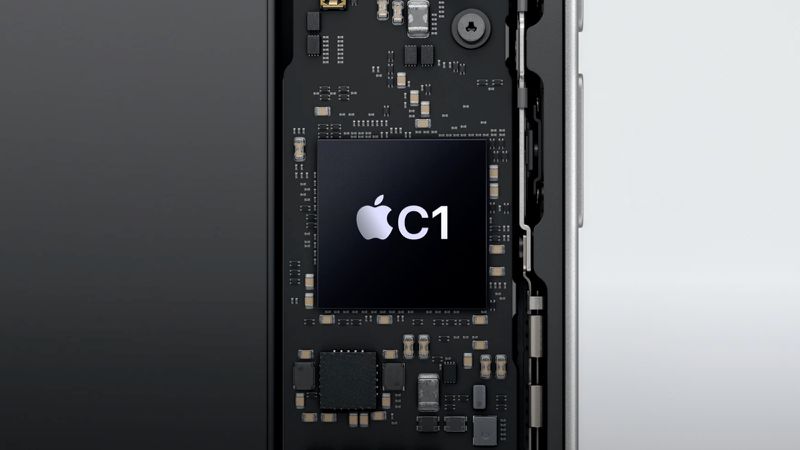
Despite concerns that Apple’s first in-house modem would lag behind Qualcomm’s established technology, real-world and lab tests suggest the C1 modem holds its own—even exceeding expectations in some scenarios.
Tech reviewers have been testing the iPhone 16e’s C1 modem alongside Qualcomm-powered iPhone models, and most report little to no difference in network performance.
The Verge's Allison Johnson found no consistent difference in performance between the iPhone 16e and the Qualcomm-powered iPhone 16:
"I've used it for the past week to make FaceTime calls, upload large video files in crowded places, and stream YouTube on the bus. I tested it alongside a regular iPhone 16 equipped with a Qualcomm-made modem—both on Verizon—and I didn't see any consistent difference in performance between the two."
Tom’s Guide’s John Velasco also noted that any difference was marginal:
"It's difficult to say if it ultimately delivers faster 5G speeds. I ran speed tests on both the iPhone 16 and 16e at three different locations in New York City, with only one test showing faster speeds with the iPhone 16e."
So how does the C1 modem actually perform in speed tests? The numbers show it competes well with the Qualcomm Snapdragon X71 modem.
Suburban New York (AT&T Network)
Midtown New York City (AT&T Network)
Toronto, Canada (Bell Network)
Lab Tests by Geekerwan (Artificial 5G Network)
Beyond speed, Apple claims the C1 modem is the most power-efficient iPhone modem ever—and independent testing confirms it.
Despite initial skepticism, the C1 modem is proving to be a capable competitor to Qualcomm’s Snapdragon X71. While it lacks mmWave 5G support in the U.S., it still delivers impressive 5G speeds, strong reliability, and superior power efficiency.
Apple is preparing to introduce its highly anticipated update to the MacBook Air lineup, with the new models set to feature the M4 chip. According to Bloomberg's Mark Gurman, Apple has already begun gearing up its marketing, sales, and retail teams, signaling that the release is just around the corner.
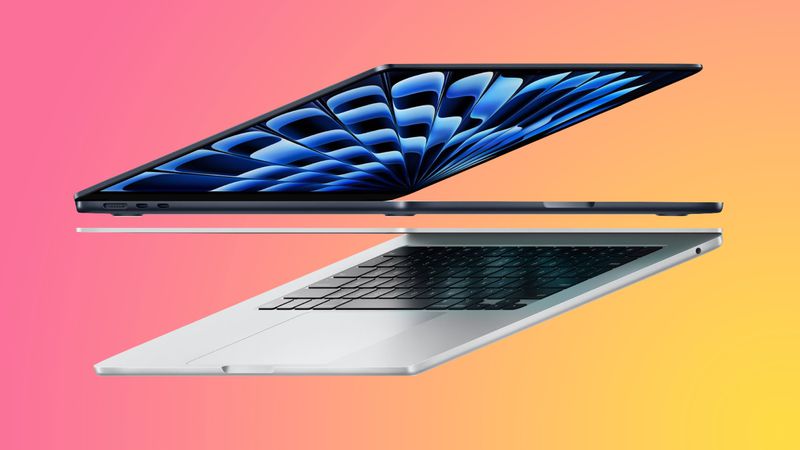
In preparation, Apple has started removing current MacBook Air stock from its stores, further indicating that the launch is imminent. Initially, many thought the MacBook Air refresh would be Apple’s first major hardware release of the year, but the iPhone 16e took that spot, launching earlier this month.
Still, sources close to Gurman are confident that the new M4-powered MacBook Airs will debut by March 2025, at the latest. While an exact date hasn’t been confirmed, the launch window appears set, with a likely debut in March. There's even a chance the machines could arrive in the first half of the month, but that remains uncertain.
The buzz surrounding these new MacBook Air models was first hinted at in December 2024, when the release of the macOS Sequoia 15.2 update included references to M4 MacBook Airs. Leaked files for unreleased models—namely the 13-inch and 15-inch MacBook Airs (M4, 2025)—provided the first solid evidence that Apple was preparing to launch these new devices.
With the new M4 chips, significant improvements in performance, energy efficiency, and power management are expected. These upgrades should make the MacBook Air even more attractive to a wide range of users, whether you're a student, professional, or simply someone who loves sleek, powerful laptops. The new models are shaping up to be one of Apple’s most exciting releases yet.
So, if you're thinking about upgrading or just curious about the upcoming features, make sure to mark March 2025 on your calendar—it looks like the M4 MacBook Airs are almost here!、
>>>Get the best batteries for your business and professional needs at Batteryone.co. Contact us today for all your battery requirements.
>>>To stay updated on the latest trending stories, visit: Batteryone.co/blog.
Apple is reportedly considering the introduction of advertisements in Apple Maps as part of its ongoing efforts to expand its Services revenue, according to a report from Bloomberg’s Power On newsletter. The company recently held an all-hands meeting to discuss potential monetization strategies for its navigation app, marking a renewed interest in a concept that was first explored back in 2022.
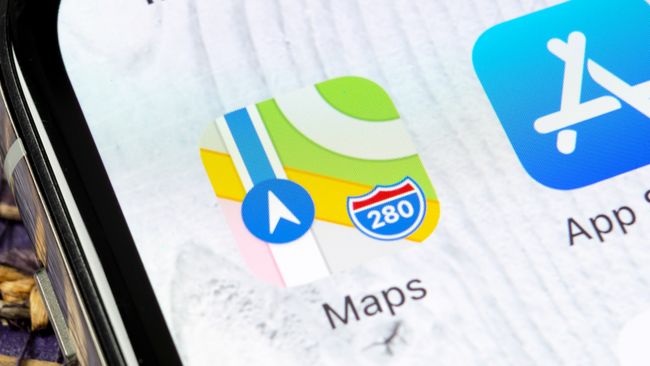
At that time, reports indicated that search ads were already in development, with an expected rollout in 2023. However, the plan never materialized. Now, Apple appears to be revisiting the idea, though there is no official confirmation of an imminent launch or active development at this stage.
If Apple moves forward with this initiative, advertising in Maps could follow a model similar to Google Maps, where businesses pay to appear higher in search results. Additionally, Apple might allow businesses to sponsor locations on the map itself, giving retailers and restaurants greater visibility within the app.
Apple has already integrated advertising into several of its platforms. The App Store features sponsored applications in search results and on the home page, while Apple News displays mid-article ads, sponsored content, and paid subscriptions. Late last year, Apple even transitioned its ad sales to an in-house team, signaling a broader push into digital advertising.
Expanding advertising efforts in Apple Maps aligns with Apple's broader strategy to increase its Services revenue, a segment that has become a major growth driver for the company. According to Apple Insider, Apple held a 51% share in programmatic advertising as of August 2024—an increase of 6% year-over-year—and generated approximately $10 billion in ad-related revenue in 2024 alone.
Bloomberg also suggests that Apple may extend advertising to Apple TV+, beyond its existing MLS and MLB game sponsorships. If implemented, this move could mark a significant shift in Apple’s traditionally ad-light ecosystem, further solidifying its presence in the digital advertising space.
While Apple has not yet confirmed a timeline or specific plans for Apple Maps ads, it’s clear the company is actively exploring new ways to monetize its services—a shift that could reshape how users experience the Apple ecosystem in the years ahead.
>>>Get the best batteries for your business and professional needs here at Batteryone.co. Get in touch with us today for all your battery needs.
>>>If you want to catch more latest trending stories, please visit:Batteryone.co/blog.